What students should know about AI-generated content before using it
AI-generated content is now the default state of much of the information environment. The literacy work students need, both as creators using AI and as consumers evaluating others' content.
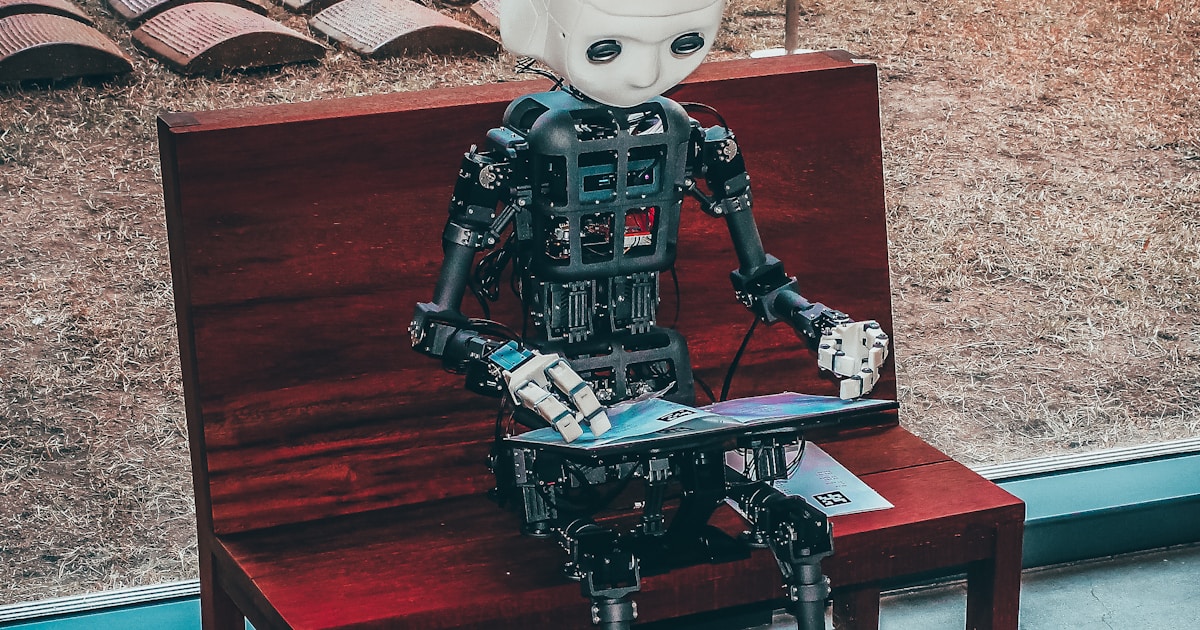
The line between human-made and AI-generated content has blurred fast. Three years ago, students could mostly tell when an image was AI: the hands were wrong, the text in backgrounds was garbled, the lighting was uncanny. The current generation of generative tools doesn’t have those tells anymore, or has subtler ones, and the next generation will have fewer. Students are now living in an information environment where reliable identification of synthetic content is increasingly impossible from the content itself.
This is not a future scenario. It is the current state of the internet for any student looking at images, video, or text. What students should know about AI-generated content before they use it, and what they should know about other people’s AI-generated content before they trust it, is a literacy question that schools and families haven’t fully caught up to.
What AI content is and isn’t
A few distinctions worth being clear on before the rest of the conversation makes sense.
AI-generated content is content produced primarily by a machine learning model in response to a prompt. Text, images, audio, video. The model uses patterns learned from training data to produce something that resembles human-made content. The output is statistically plausible, not factually verified.
AI-assisted content is human-made content where the human used AI as a tool somewhere in the process. A student who used ChatGPT to brainstorm ideas, then wrote their own essay, has produced AI-assisted content. The line between the two is fuzzy and the right place for it depends on context.
Synthetic content is AI-generated content presented as if it were human-made. The distinction matters: content can be generated and labeled (which is honest) or generated and unlabeled (which is misleading). The labeling, where it exists, is the difference.
What students should know before using AI
For students using AI tools as part of their own learning or work, several things worth understanding.
The output is not facts; it is plausible-sounding text. AI models hallucinate. They produce confident-sounding information that is wrong, with citations to sources that don’t exist, statistics that were never measured, quotes from people who never said them. Verification is not optional.
The output is not yours. Even when the AI produces something useful, the student didn’t write it. Using AI output as your own work without disclosure is a form of academic dishonesty that schools are rapidly developing policies on. The policies vary; the underlying principle (do not present AI work as your own) is consistent.
The thinking is the point. The most consequential thing about AI in school work is not the policy on using it; it’s the question of whether the student is doing the cognitive work the assignment is supposed to develop. Using AI to skip the thinking means the assignment didn’t do what it was meant to do, regardless of whether the work was disclosed. The classroom AI conversation ultimately comes down to this.
The output reflects the prompt. AI responses are heavily shaped by what the user asks. Vague prompts produce generic responses. Specific prompts with constraints produce more useful responses. The skill of working with AI tools is the skill of asking carefully, and that skill is itself worth practicing.
The data goes somewhere. Anything typed into a public AI tool is potentially used to improve future versions of the model. Personal information, schoolwork, draft writing—it leaves the student’s control once submitted. Some tools have privacy controls; many free tools don’t.
What students should know about other people’s AI content
For students consuming content others have made, the work shifts.
Content is increasingly synthetic by default. The mental model that “if it’s online, a person made it” is increasingly wrong. Images on social media, articles in low-effort content farms, comments on articles, even some headlines, are produced or substantially shaped by AI. Students should adjust their default skepticism upward.
Detection is not reliable. AI-detection tools exist and they don’t work well. They flag legitimate human writing as AI-generated. They miss carefully written AI content. Detection-based media literacy approaches are increasingly broken. The shift has to be toward provenance and verification rather than toward detecting fakes.
Provenance matters more than the content itself. Where did this come from? Who made it? When? For what purpose? On whose behalf? These questions matter more in 2026 than they did in 2016, because the content itself can no longer be trusted to reveal its source. Students should look at the chain of who-made-this-and-why before treating any specific image, video, or text as a source.
Specific signals can still help. Reverse image search to find earlier versions of an image. Looking at the account history of the source. Checking whether other reputable outlets have covered the same claim. These are the lateral-reading moves that have always been useful and are now essential.
Emotional activation is a warning. AI-generated content optimized for engagement skews toward content that produces strong emotional reactions. If a piece of content is making you feel a sharp emotion (rage, certainty, vindication, despair), the content was potentially designed to produce that reaction, and the design might be machine-driven. The pause before sharing is the most important moment.
What schools should be teaching
The curriculum implications are real and most schools are still catching up.
Treat AI literacy as a discipline. Specific lessons on what these tools are, how they work, what they’re good and bad at, when to use them, when not to, how to evaluate their output. This is a unit of work, not a paragraph in the academic-honesty policy.
Treat verification as a habit. The skills of cross-referencing claims, checking sources, evaluating provenance, and slowing down before sharing are needed for any information-environment work, and they are doubly needed when synthetic content is in the mix.
Treat the policy questions as live. School AI policies will continue to change. Students benefit from knowing not just the current rules but the reasoning behind them, so they can navigate situations the rules don’t yet cover.
Treat the writing development case seriously. Heavy AI use during the formative period of writing instruction can hurt skill development. The case for writing-by-hand-without-AI for substantial parts of K-12 instruction is real, even as AI use becomes more common in adult work.
What parents should be doing
For families managing this at home, three concrete moves.
Have the conversation directly. Talk about what AI tools are, when the kid is allowed to use them for what, what disclosure is expected, what verification is expected. The conversation is more useful than any tool restriction.
Use AI in front of the kid. The kid will see the AI get things wrong. They’ll see what it does well and badly. The process of evaluating AI output is itself a learnable skill, and it’s learnable by example.
Slow down on synthetic-suspicion content together. When a striking image or claim shows up on the family’s feeds, pause and check it together. The moment-to-moment practice is what builds the habit.
The honest summary: AI-generated content is now the default state of much of the information environment, and the literacy work is more important than it has ever been. The students who develop appropriate skepticism, verification habits, and self-awareness about their own AI use will navigate the next decade better than the ones who don’t. The work is real, ongoing, and shared between schools, families, and the students themselves.
About the author
Weblogg-ed Team — The Weblogg-ed Team is the collective byline behind our editorial coverage. We write about teaching, learning, and the institutions around them as technology and students keep moving faster than the systems built to serve them. Our work covers classroom practice, edtech and AI tools, online learning, homeschooling, digital literacy, and higher education, written for teachers, school leaders, parents, and lifelong learners who want clearer thinking than the press releases provide.
Related posts
Teaching media literacy in an algorithm-shaped attention environment
The media literacy curriculum most schools use was designed for a search-era internet. The feed era requires different lessons, and the work has gotten harder.
10 Years of Blogging: Time for a Change and a Book
After a decade of blogging, we’re shifting how and where we share, moving to a new space better suited to curation and conversation, and announcing a forthcoming book of collected posts whose proceeds will support learning initiatives.
Reading as a Participation Sport
Reflections on how digital tools like the iPad, Instapaper, Kindle, and interactive magazine apps are transforming reading from passive consumption into a more participatory, connected, and collaborative experience.