Chronic absenteeism, three years on: what the data actually shows
Chronic absenteeism doubled during the pandemic and has not fully recovered. What the current numbers show, why they persist, and which interventions are working.
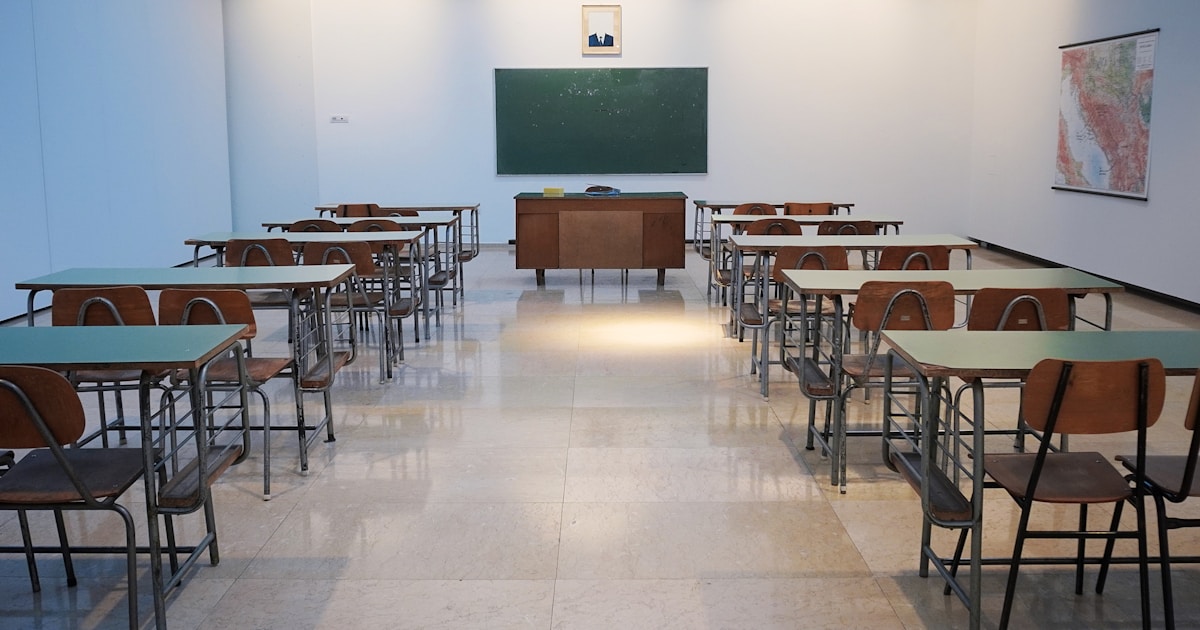
Three years past the worst of the pandemic, chronic absenteeism is the policy story in K-12 education that has not gone away. The pre-pandemic baseline of roughly 15 percent of students chronically absent (defined as missing 10 percent or more of school days) doubled in 2021 to 2022 and then receded only partially. In the most recent national data, somewhere between 25 and 30 percent of students are still chronically absent. That is one in four kids missing at least three and a half weeks of school across the year.
This is not a small story. The downstream effects on academic outcomes, on the social experience of school, on what teachers can plan for in any given week, and on the basic question of what universal public schooling does, are all consequential. Worth a careful look at where we are and what the responses have looked like.
The current numbers
National data from the Department of Education and from individual state reports tracks roughly the same trajectory. Chronic absenteeism rates spiked sharply in 2021-2022 across nearly every state. They came down somewhat in 2022-2023. They came down a little more in 2023-2024. They have been slow to fall further since.
The pattern is sharper at the extremes. Very high-poverty schools have chronic absenteeism rates near 40 percent in many districts; affluent suburban districts often sit closer to 15 percent. The gap was narrower pre-pandemic and has widened. Whatever the structural factors, they hit the most vulnerable students hardest.
Specific subgroups also moved differently. High school absenteeism stayed elevated longer than elementary did. Black, Latino, and Native American students saw larger increases that have receded more slowly. Students with disabilities and students experiencing homelessness reached chronic absenteeism rates above 50 percent in many large urban districts.
Why it persists
The pandemic broke something about the unspoken contract between families and schools, and the repair has been incomplete. A few specific dynamics seem to be driving the persistence.
Family attitudes toward attendance shifted. Many parents who would have insisted on perfect attendance pre-pandemic now treat school more like a flexible service. A mild illness, a scheduling conflict, a vacation that overlaps with the school calendar, a family obligation, a tired Friday. The reasons are individually unobjectionable; in aggregate they add up to materially more missed school. The cultural norm of “you go unless you are seriously sick” has weakened.
Health-related absences are higher than they were. Post-pandemic, illnesses that previously sent kids to school still send kids to school, but kids whose parents work from home and can stay home with them no longer feel the same pressure to send a sick child in. The sick-day calculus changed for parents who can flex their work, and the absences for that group went up.
The transportation and logistics infrastructure of school attendance got fragile. Bus driver shortages have persisted in many districts. The “go to school early because the bus comes early” muscle memory got rusty during remote learning and has not fully come back. School starts that begin before 8 AM see lower attendance than they did pre-pandemic.
Mental health-related absences have grown. The share of high school students who report missing school for mental health reasons rose sharply during the pandemic and has remained elevated. Some of this is appropriate (kids who genuinely needed to stay home are doing so) and some of it is concerning (kids developing patterns of avoidance that compound).
School engagement, especially in high school, has not recovered fully. Students who feel that school is largely irrelevant to their lives are easier to keep home. The gap between the most engaged and least engaged students within a school grew during remote learning and has not closed.
District responses: carrots and sticks
The variety of response strategies is wide and the evidence on what works is still being gathered.
Carrot approaches: incentives for attendance (gift cards, recognition, special activities for high attendees), positive outreach (a phone call from a teacher when a student returns), parent communication tools (real-time texts when a student is marked absent, daily check-ins). The evidence on these is mixed; small interventions seem to help at the margin, but the effects are typically a few percentage points rather than the kind of structural recovery the data calls for.
Stick approaches: truancy court referrals, parent fines, automatic enrollment in attendance contracts, enforcement of compulsory attendance laws. These have a longer history and a mixed-to-poor record on outcomes. They reach families who are already in difficult circumstances and often add stress without producing better attendance. Some districts have explicitly pulled back from the punitive end of the spectrum.
Structural approaches: changing school start times, providing alternative transportation, building tighter relationships between specific kids and specific adults at the school (the “every kid has a known adult” model that some research supports), addressing the underlying causes of mental health absences with on-site mental health staff. These take more work and more resources, and the evidence base for them is stronger.
What’s working
The interventions with the strongest evidence so far cluster around relationships and structural support rather than enforcement.
Attendance teams. Specific staff (often counselors or social workers) who track chronically absent students individually, follow up with families, and remove barriers (transportation, childcare for younger siblings, alarm clocks for kids whose parents leave for work before school starts).
Specific-adult relationships. Programs that ensure every chronically absent student has a single adult at the school whose explicit job is to check in with them, know their situation, and notice when they are absent. The evidence here is strong, particularly for students with disabilities and students transitioning between elementary, middle, and high school.
Mental health supports. Schools that added on-site mental health staff have seen modest reductions in mental-health-related absences. The hard part is staffing; the supply of school-based mental health professionals is not large enough to meet the demand.
Tighter parent communication. Real-time texting when a student is absent, with quick follow-up. The pre-pandemic version of this (a phone call after a few days) is too slow.
None of these are silver bullets. Districts that have layered them together have seen meaningful but partial reductions in chronic absenteeism. Recovering to the pre-pandemic baseline is going to take more time and more sustained investment than the political conversation usually allows for.
The structural questions
The harder question that the absenteeism data raises is whether the high school experience as currently constructed still works for a meaningful share of students. If a quarter of high schoolers are missing more than a tenth of school, the implicit message is that school is not delivering enough value to keep them there. The school’s responsibility for that is real; the broader societal shift in how families think about attendance is real; the answer probably involves both.
Some district leaders have started asking whether the school day, the school year, and the high school curriculum need bigger structural revisions to be relevant to current students. Others are pursuing the more incremental route of better support for the students who are struggling within the existing structure. Both arguments have merit; neither has produced the kind of recovery the data calls for.
The pandemic ended. The chronic absenteeism it produced has not. That is the policy story to keep watching, and it is not on track to resolve quickly.
About the author
Weblogg-ed Team — The Weblogg-ed Team is the collective byline behind our editorial coverage. We write about teaching, learning, and the institutions around them as technology and students keep moving faster than the systems built to serve them. Our work covers classroom practice, edtech and AI tools, online learning, homeschooling, digital literacy, and higher education, written for teachers, school leaders, parents, and lifelong learners who want clearer thinking than the press releases provide.
Related posts
State testing in 2026: what’s been kept, what’s been dropped
The standardized testing landscape is fragmenting. The federal foundation remains; the state-by-state changes have shifted the picture. An honest current state.
The UnCommon Core
We argue that our testing-obsessed education system is failing to prepare kids for a complex future, and we propose an "UnCommon Core" of skills and understandings—from living lightly on the Earth to networked learning and democratic participation—that every child should develop, taught through rich, integrated, real-world contexts rather than test-driven, siloed curricula.
New Assessments for New Learning
It has gotten to the point where we shudder every time we hear plans to “increase student achievement” or “improve schools,” because those phrases almost always mean one thing: raising standardized test scores. Far too little of what those assessments measure is what we care about as parents, and we need new ways to assess learning that value passion, problem solving, collaboration, and real-world impact.